














Ever since the 1980s – when cocaine started pouring over the United States’ Southern border – most, if not all US presidents have declared a “war on drugs”. This war on drugs has proven to be the longest and probably the most difficult conflict the United States has partaken in, surpassing by far the one of Vietnam and Afghanistan in terms of complexity and timespan.
 The latest installment in this lengthy conflict has the White House’s eyes fixed on Venezuela, a country east of Colombia, the world’s cradle of cocaine. Some of the main protagonists of this conflict are President Donald J. Trump, 45th and 47th president of the USA, and Nicolás Maduro Moros, current president of Venezuela on paper and, some may say, a narco-state dictator in reality. Operating from Venezuela are two important cartels, Tren de Aragua, and the Cartel de los Soles, which takes its name from the sun Venezuelan generals wear on their uniforms, as it is made up of mostly high-ranking military officials from the country.
The whole standoff started in January 2025, when the United States classified Tren de Aragua as a terrorist organization. This allowed the U.S. to have a lot more freedom in its approach to fighting the group, giving it almost a plausible reason to do so. A few tariffs and sanctions between the two countries were the first warning signs.
In the coming Summer of 2025, the United States declared the other association, Cartel de los Soles, to be a terrorist organization as well. To act on their statement, the US deployed several ships in the Caribbean to “interdict narcotics” (prohibit them). As a response, Venezuela mobilized its armed forces, gearing up for the worst.
Nicolás Maduro and Venezuelan officials have repeatedly denied US accusations of drug trafficking and narco-terrorism, labeling them as “false news” and “manufactured pretexts” for regime change. Maduro called the US actions and narratives “fabricated” and insisted Venezuela is not a cocaine-producing country, stating, “They are fabricating an extravagant narrative, a vulgar, criminal and totally fake one”.
The Venezuelan government and sympathetic sources argue that the US has not provided court-backed or internationally recognized evidence to support claims that high-level Venezuelan officials run a drug cartel. Some regional governments (including Mexico and Colombia) have pointed out that there is no concrete proof linking the Venezuelan government directly to narcotics activities.
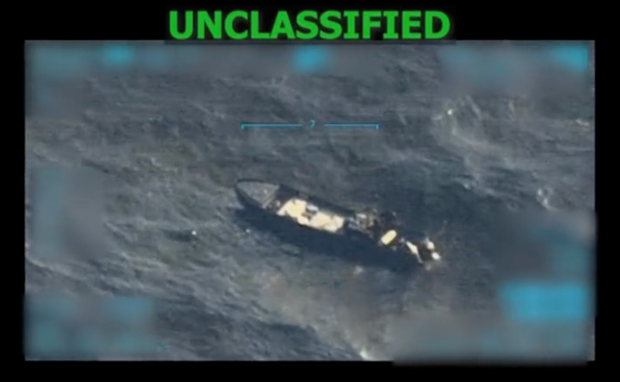
The beginning of Autumn is when the whole situation blew up; the United States struck several boats off the coast of Venezuela to prevent their alleged trafficking of high quantities of narcotics on US soil. This created quite a panic amongst the Venezuelan officials, and in October 2025, Venezuela filed an urgent complaint against the United States at the U.N. Security Council.

Venezuelan authorities and critical analysts often assert that US accusations and sanctions are part of a broader strategy for regime change rather than a genuine anti-drug effort. They argue that US military build-up and sanctions have aimed to weaken Venezuela’s government instead of directly reducing drug flows.
As it stands, the US-Venezuela tensions are at a crucial point, with neither side showing any attempt to back down. As many as 10,000 US soldiers are currently deployed in Puerto Rico, with a part of their Navy sent down to the Caribbean and its patrols to the coast of Venezuela. No one can tell where this conflict is going to go next, yet this ranks as one of the top highlights of the United States’ never-ending crusade against the drug trade.
