
















As time goes on, despair encroaches on humanity; it seeps into every pore of the world and shapes how we interact with it. Many philosophers have talked about despair as what leads to suicide, although many others link it with the absurd, highlighting that the loss of meaning is what brings the desire to cease life. I believe that there is a more pressing side effect of despair: obedience. To me, despair has been historically manufactured to facilitate compliance, not bring forth death. In such, I disagree with Camus in his essay, ‘The Myth of Sisyphus,’ where he outlines that despair and the loss of meaning drive the action of suicide, in that despair gives such psychological pain as to command death as a form of catharsis.
Torture and public execution
The open torture of the body and its subsequent death as a spectacle to be seen was the original way of manufacturing obedience through despair. To reflect the crime on the body of the criminal was to bring justice, and by making their death a performance, those in power showed the onlookers the direct consequences of their actions. In such cases, the victim may be consoled by their forthcoming death; this was not always the case. Branding, amputations, and other forms of what I would call “body horror” could ensue, in such a way that the victim would be a living reminder of consequences, for both themselves and their onlookers. The latter would know and understand the carnal implications of breaking the law and would thus be incentivised to obey it. This follows until the killing is of a hero, where their martyrdom could produce two opposing reactions. One being the martyr would inspire and evoke change, and the other would be despair. Hence, despair brings forth obedience; if there is no hope, why strive for change, a process full of hardship and pain? Why not sink into numbing, comfortable obedience? If the possibility of a wonderful future is so far, what would the fight be worth? This is employed much in police states, where police brutality occurs without due process. The logical reaction is one of anguish– of despair.
Pleasure
 Pleasure, too, can bring forth despair when everything in your life is made to keep you comfortable, but not enough for joy. Nowadays, we have many instruments to bring forth pleasure, whether it is false pleasure or pleasure founded through consumption. Media is designed to be so mindless yet stimulating that your brain just switches off to it, surrounding your mind in numb pleasure. Food is designed to be so good as to addict you, so you eat more and more without a sense. Such gluttony has been normalised, if not encouraged. As such, perversions have been normalised. I am by no means puritanical; however, the way our minds have been moulded into perversion is systematic – films that decompose the form as to dehumanise, and content that numbs to violence. We consume from day to night as distractions from substance; without substance, we are dragged into despair. Despair that brings forth obedience, because life is not so bad, we can consume. Did you really choose anything about your life that is not arbitrary? We make small pleasurable decisions; we are guided away from the painful ones. Rebellion is painful, almost like severing a limb; you sever a docility that is inherent to all under our current system. The supply of conditioned comfort and pleasure then becomes the easiest form of control, subliminal or otherwise. People should choose to rot away in front of a screen, shovelling their mouths full of Pringles or something of the like.
The church
 The church presents itself as the antidote to despair, but in doing so, it renders despair useful. Across traditions, the promise is constant: this world is illusory, temporary, and its suffering is not to be confronted but endured. Salvation, enlightenment, escapes from cycles of rebirth or transcendence beyond material existence; the church offers meaning that lies somewhere else. It thus reframes despair as a test to be survived, not a condition to be resisted.
Acceptance is a virtue most often preached. Accept suffering, accept your station, accept the limits placed upon you. Earthly industry becomes divinely ordained or karmically deserved, or insignificant when weighed against eternity and infinity. Change is discouraged not through explicit command but through consolidation: why risk revolt in a world that is already doomed, or already redeemed? Why strain against systems of power when reward or release has been promised beyond them?
Despair is sanctified and given meaning by the church. The office, the suburb, the hierarchy, and the monotony of work and consumption are rebranded as trials rather than conditions.
Nihilism
Nihilism is often mistaken for rebellion, but in practice, it is one of despair’s most obedient forms. To declare that nothing has meaning, that no value is real, and that all structures are arbitrary appears, at first, to dissolve authority. Yet when nothing matters, nothing demands resistance. Nihilism strips action or urgency, replacing it with detachment and irony.
In a nihilistic framework, suffering is neither injustice nor tragedy; it simply is. Power no longer needs to justify itself, because justification has been rendered meaningless. What remains is a subject who observes, critiques, and mocks, but lies inactive. Cynicism becomes mistaken for clarity (by no means is cynicism bad, but one must use judgment and a bit of hope, please) and passivity framed as intellectual. The world is corrupt, therefore engagement is naive; all commitment is foolish.
This posture is not dangerous to systems of control — it is the ideal of powerful refutation; of being able to disbelieve enough to disobey, to consume, to endure, and to comment from a distance, convinced that resistance is futile. Despair metastasises.
In this sense, nihilism does not negate meaning; it abolishes the possibility of struggle, offering no heaven, no pleasure, and no terror. The quiet comfort of non-involvement and obedience is kept, and as a result, life becomes more stable.
Final words
Despair, then, is not an accident of modern life, nor a purely internal failing of the individual. It is cultivated. Cultivated through terror, pleasure, and then consolidated through metaphysical pacification. It does not demand that we die; it demands that we remain alive and compliant. A dead subject is useless, but a despairing one is predictable, governable, and docile. In this sens,e despair is the most effective tool of order.
To escape despair is not to seek happiness or a meaning handed down from institutions that profit from our submission. It is to refuse the lie that nothing can be changed, that ‘it is what it is’, and it won’t be anything else. Refusal is painful, and it offers no guarantees. It strips away comfort, certainty, and the narcotic belief that endurance alone is virtue. But obedience has always been easier than freedom, and despair has always been the most convincing argument.
To act despite despair — without promises of salvation, pleasure, or absolution — is the only rebellion left to those who have been taught that hope is naive.


Giulia Resta — Mar 26, 2026 at 1:05 PM
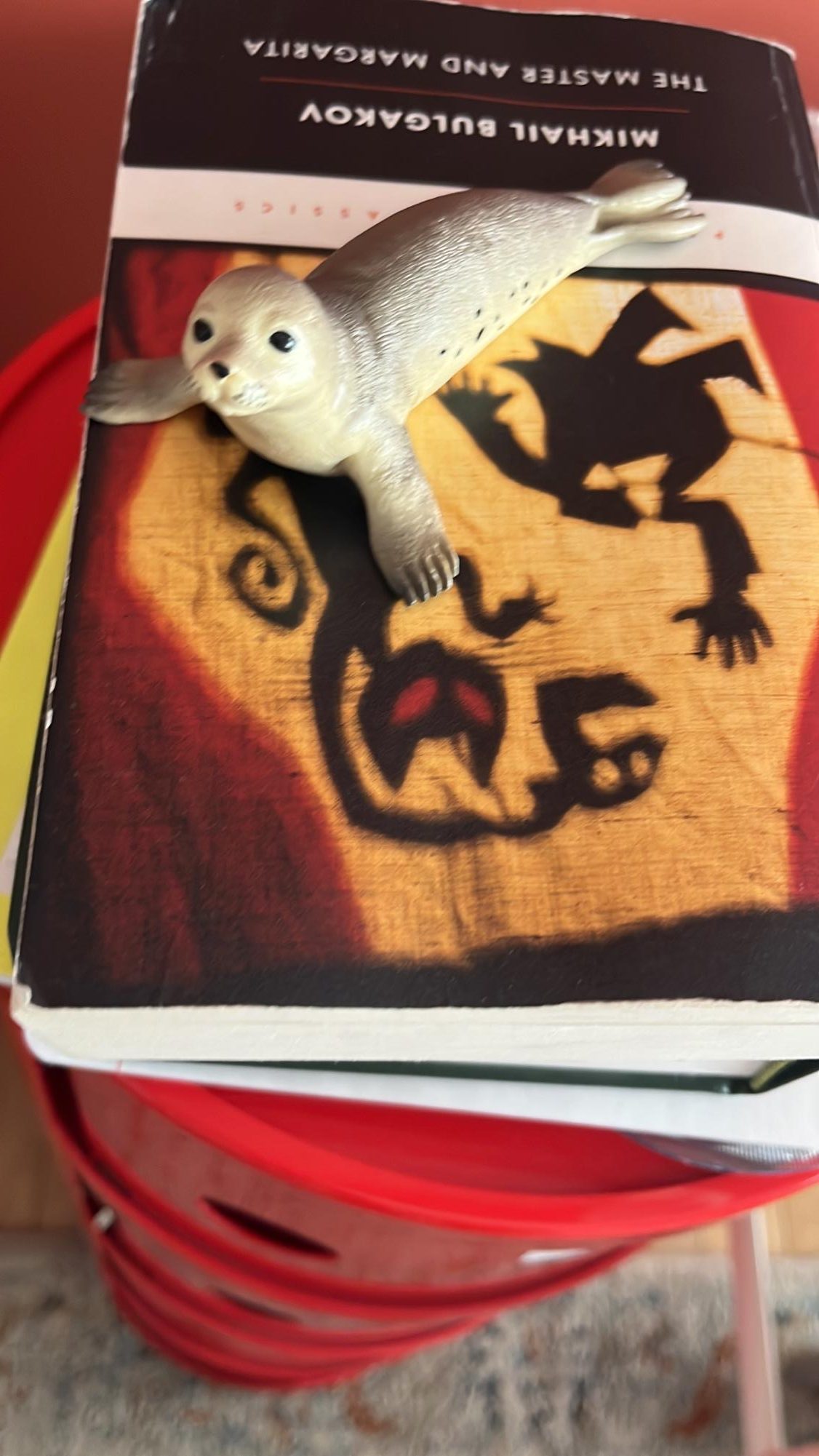
i love the seal