
















The changing of leaf colour during autumn is a spectacle known and loved by many. However, not many people know the science behind this change. Although the biochemistry behind the changing of leaves is very well known in the scientific community, there is still an existing and ongoing debate about why these trees evolved into their autumn colours in the first place. Still today, the story behind this transformation remains a mystery, as scientists continue to discuss and speculate over various theories about this colour changing phenomenon.

However, before we dive into the different theories and hypotheses scientists are making, we first have to understand what physically happens to a leaf when it changes colour.
If a leaf turns yellow during autumn, it means that it was actually always yellow in the first place. This colour comes from a set of biological pigments known as carotenoids, which are only revealed once the green chlorophyll in the leaves has been broken down and reabsorbed by the plant to prepare for the harsh winter seasons. However, leaves that turn red or purple undergo a different process. Their unique colour comes from a specific combination of chlorophyll loss and anthocyanins (the pigment for this type of leaf colour). This process is very commonly found in fruits and vegetables as well.
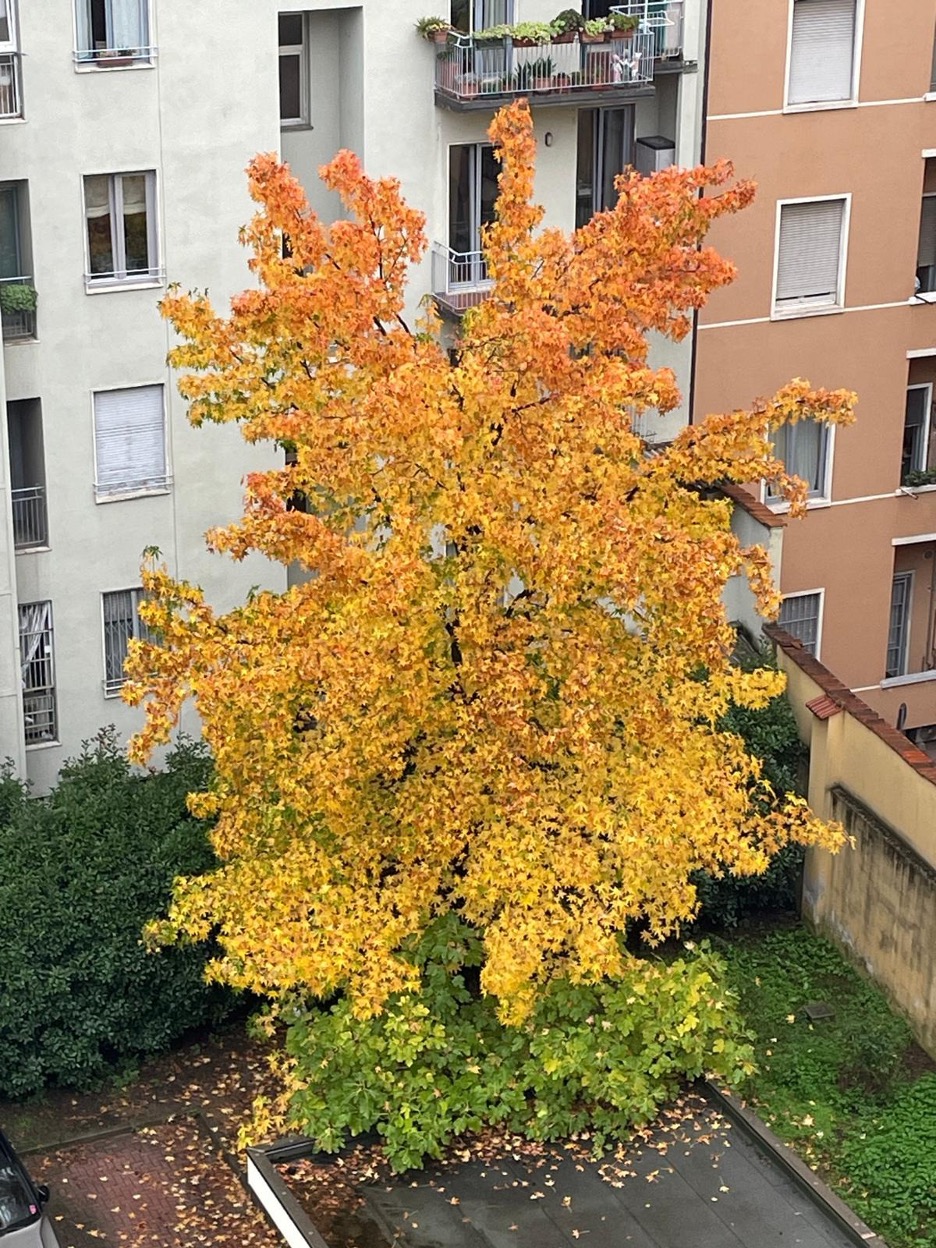
If we look at this process through the eyes of Evolutionary Biology, we are able to come up with some theories and speculations about this mysterious change. Many believe that the fact that these annual changes have continued and persisted through the process of natural selection for thousands of years means that they are of particular importance and thus may even be of benefit to the trees themselves. In fact, genetic research suggests that trees only began producing these colour-changing pigments oddly late in their evolutionary history – way after they began the process of reabsorbing chlorophyll to prepare for the winter season. What complicates this theory even further is the fact that a tree is able to produce multiple colours at the same time, a beautiful sight that is unfortunately short-lived, as leaves will often fall from the branches within days or weeks after changing colour.
Another one of the main theories (and possibly one of the many theories that can be backed up with scientific evidence) is the photoprotection theory. This theory suggests that the different pigments act like a kind of ‘sunscreen’ that protects their trees in their ‘vulnerable’ metamorphosis stage. Anthocyanins (the red leaf pigment) are thought to protect leaves from sunlight damage as they deteriorate – in a process called senescence – since they are powerful antioxidants. This theory is very much well-supported and has gained credence throughout the years, thanks to a study that showed that sunlight can be more damaging to leaves during autumn in the Northern Hemisphere.
One study analysed over 2,368 deciduous trees in temperate regions. They found that 290 of the trees turn red while 378 turn yellow, and while red autumn colours seem to have evolved 25 times, yellow autumn colours seem to have evolved 28 times. This contributes to the theory that distinct colour changes are needed for specific and beneficial purposes, giving biological advantages to the trees.
Many other factors have to be taken into consideration and studied accordingly to be able to make a judgement on such matters. However, one thing that can be unanimously agreed on is that over millennia, we as humans have shaped and altered the tree life around us, applying our own selective pressure on tree pigmentation. Furthermore, climate change is impacting the vibrancy and timing of leaf colour change. The future of these trees remains uncertain as climate change starts to impact our world more and more. If there is a time for action, it is now. For us and for our breathtaking seasonal autumn performance.