













Among rich countries, the United States has the highest rates of both gun ownership and gun violence. This could be for many reasons, including political unrest, hunting, and the aesthetics of being a gun-wielding person. The Americanism of gun-wielding for sport is felt throughout the world, and I must clarify that I do not refer to hunting in this moment; I mean owning a gun for the sole purpose of having one. I will not advocate for a certain side of the gun control argument and will try to remain objective. It is not my wish to try interpret the Second Amendment, but for the sake of not arguing for or against guns, I will keep the stance that the amendment does advocate for gun usage as it does today. I do not negate that gun violence is a problem.
American language of violence
From birth, the US has articulated its identity through its distinctive language of violence. This language, spoken through history and political rhetoric, shaped the American perspective on power, freedom, and the self. This language is not metaphorical. I mean it in the way Wittgenstein describes a system of meaning which is constituted through use, repetition, and social practices. Violence in the context of the USA operates through a language game in which concepts such as freedom, self-defence, and sovereignty acquire meaning (not through abstract definition) but through historically situated forms.
In such a framework, the gun is more than a mere instrument, and its meaning is not inherent in its form; rather, it emerges through the ways it is invoked, displayed, and justified within American discourse. To speak of firearms as symbols of liberty is not to make an empirical claim, but to participate in a language game in which rules normalise violence while simultaneously alienating the gun from its form. A gun is inherently a tool of violence; all other uses are byproducts of violence. As Wittgenstein suggests, what appears natural or self-evident is often simply what has been rendered familiar through sustained use.
When violence is embedded within the ordinary language of rights and protection (i.e.: you have the RIGHT to bear arms, guns PROTECT your RIGHTS, FIGHT for your RIGHTS, come and get it) it ceases to appear morally fraught, (as it would, owning and brandishing weapons is just kinda a weird thing to do to many) instead it becomes a practice; a background condition of an American form of life. To question the role of a gun is not to question the tool that is a gun, or the policy surrounding it, but a challenge to the grammar through which American freedom has been articulated. I’m gonna quote Charlie Kirk for this: “the confiscation of guns then leads into the erosion of freedom and liberty.” This comes from a gun debate with someone who just wanted more gun restrictions, here proposing a registry. Kirk blatantly attributes guns the role of “protectors of freedom.” What is a gun but mere metal and powder designed meticulously for violence, to tear through the flesh of men, women, and children? What freedom can be found through the imposition of fear? Because that is what a gun does, it imposes fear and violence on those whom the wielder sees fit to impose it upon, maybe its nazis and communists, maybe it’s the very wielder, maybe it’s an innocent individual (not to imply any of the aforementioned are not innocent apart from extremist groups.)
At the centre of this language game lies an ideal of radical individualism, in such the American subject is positioned as both the the speaker and enforces of meaning, responsible for securing their own safety through force if necessary, in such a conception of selfhood presupposes a world in which the subject is in perpetual vulnerability, in such preparedness for violence (with violence) is equated with moral seriousness. In Wittgensteinian terms, the rules of the language game render alternative vocabulary (that which is grounded in collective trust or institutional reliance), suspect.
An American citizen’s two cents:
- “Ive grown up around guns my whole life. I know how to shoot one safely, clean one, store one. I was taught when i was young because it was expected i would be an avid hunter. Where I grew up it was an expectation of manhood.”
- “My dad pressured me into squirrel hunting. I was rly good at it. I never missed and always made it as quick as possible. Then one time i missed. The squirrel fell out of the tree screaming and i couldnt put it out because it was wildly thrashing on the ground. I stopped hunting forever.”
- “People(mostly on the right) associate guns with liberty, freedom and patriotism because of the second amendment to our constitution which,(among other things), gives us a “right to bear arms”. The idea was that the government cant oppress us if everyone has guns. People(again mostly on the right) associate them with rebellion and what not cuz the US was a British colony that rebelled and gained its independence. People like to have their guns feel like they are super cool rebel guy ready to stick it to the man if he comes for their freedom.”
 Semiotics and propaganda
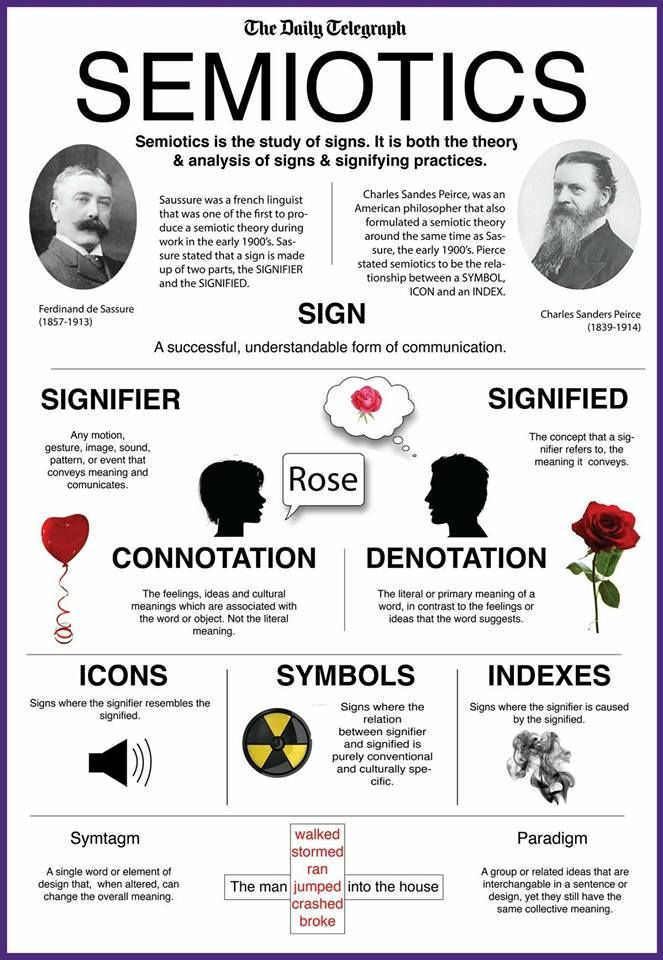
“Semiotics is the study of signs, symbols, and their interpretation, exploring how meaning is created and communicated through language, images, sounds, and gestures in society” – Google AI overview would not show me the source. :<
Signifier: the suggestion of a word, gesture, sound, or pattern that refers to meaning
Signified: the idea or the interpretation of what the signifier is related/referring to
Connotation: the feelings, ideas, and cultural meaning related to the signifier; secondary and non-literal meaning
Denotation: the primary or literal meaning

In the poster, the rifle is elevated beyond tool or instrument, instead enthroned as an embodiment of freedom; this is achieved through its symbols and composition. The eye is drawn first to the gun, not the struggling men, but the weapon in the foreground, which is enlarged above normal proportion; it cuts through the image with an unnatural glow. The ‘glow’ is intentional, not a printing error, and it almost deifies the gun and its wielder. The men on the ground grasp for it, seemingly because they need it to survive and continue fighting for freedom. (Note- it is important to mention the connotations of a soldier, as they are seen as the deliverers of freedom, and not the oppressors of the “enemy.”) The accompanying words “give them something to fight with” link guns to soldiers, thus to freedom; it strips freedom from abstraction, in such giving it a metallic form in the gun. “Fight for freedom,” here, the connotation of freedom is no longer dependent on the soldiers. So, from here, language can move it along towards complete acceptance of guns.
Here I imagine a conversation, when the word gun comes up, (disregard context, imagine 2 people, A and B, in a room. Person A says “gun” in a neutral tone), the word (signifier) allows person B to understand the signified, depending on the person, they can envision a gun or just the word gun. Many patriotic Americans could have feelings about how the gun represents their freedom, and maybe have warm emotions around it. Someone who has been oppressed by the gun (native american, maybe) could relate it to death, war, and have negative feelings. In Europe most would relate the gun to war, the gun connotes war, but in reality the denotation of the word gun is just metal and other materials contorted over each other to make a tool, a tool that can be used for many different uses, one could use the hilt to crush nuts for baking, use it to cut down branches or anything someone more imaginative than myself could find. The gun is a tool like any other.
Conclusion
To make a very long story short, over time through the visuals of a gun in propaganda, its connotations have shifted from death, to freedom and liberty, I understand that some would say that this was developed in the time after the civil war, however, I’d argue that the gun was used as a tool of repression in the years beforehand, when the american people should want to cast away the tool that has oppressed them for years under colonialism, like many colonies have done. The reason this has not happened is that Americans are not the native population of the modern USA; they still required the tool of oppression against the natives and the slaves. And so the gun was the tool for American freedom, a freedom founded on oppression. Now, the gun is used in the same manner, against immigrants and birthright US citizens by ICE. It is still perceived as a tool of freedom against synthetic threats, allowing people to give up their freedom for perceived safety. Freedom and surveillance, however, are precisely what is lost when surveillance and violent carceral systems are imposed as the products of the Gun doctrine.
