












On Tuesday night, 29 skaters stepped onto the ice at the Assago Forum for the women’s single skating short program, competing for a place in Thursday’s final and a chance to win an Olympic medal. The short program has seven required elements, which vary slightly between men and women. For the women, this includes a double or triple axel, a triple jump, a jump combination, three spins of varying types, and a step sequence that must fully utilise the ice surface. Due to the scoring being accumulative and often highly competitive at the elite level, a minor error can cost a skater several points in both technical and artistic scores, which is often impossible to recover from, as seen on Tuesday where small errors dropped contenders significantly in the rankings. Among the standout performances were performers from Korea, Japan and the USA.
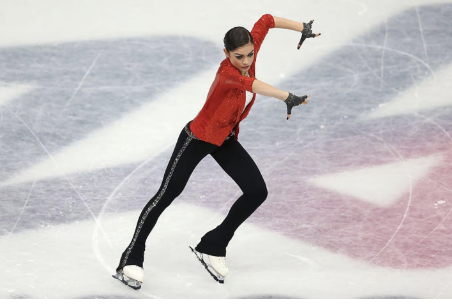
Adeliia Petrosian, a Russian athlete performing as neutral, quickly became a crowd favorite. She delivered a routine to a Michael Jackson sequence, including songs like ‘Billie Jean’ and ‘They Don’t care about us’. In the short program, Adeliia performed a triple axel, the most difficult jump in the short program as quadruples are forbidden. She’s trained by one of the toughest trainers, Eteri Tutberidze, known for training ice skating legends like Alexandra Trusova, the first woman ever to attempt five quadruples in a free skating program. She ended up with a score of 72.89, closing the night in 5th place going into the free skate.
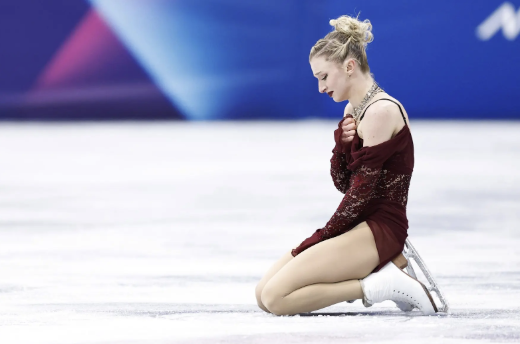 Amber Glenn, competing for Team USA, made her Olympic debut on Tuesday night, skating to Madonna’s ‘Like a prayer’. She was one of the only performers to land a triple axel in the women’s short program, which would normally result in an extremely high score. Unfortunately, after her flying sit spin, she said that she ‘tapped down on it’ which isn’t something she usually does, resulting in her being off balance and her core not being stable. Because of this, when she performed her triple loop jump she couldn’t make the three intended spins and only made two. In the short program such a mistake will have a big impact on the score, as the score is very technical and the triple jump was one of the required elements, consequently, she didn’t receive any points for it. In the end, Glenn placed 13th with a score of 67.39 and came off the ice knowing that her chances at a medal had been effectively ruined, although in the final program she was fourth.
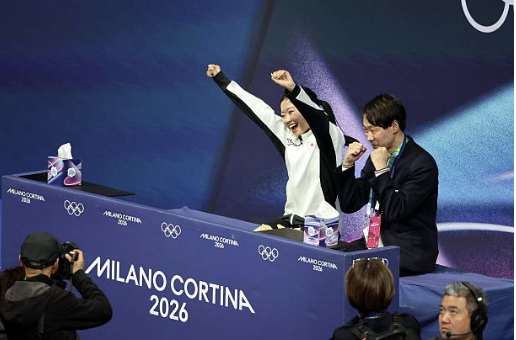 One of the most mesmerising things about that night was the amount of young competitors present, like Ami Nakai, representing Japan, who is only 17 years old. The balance between more established skaters and emerging talent was interesting as well, as figure skating is a sport where 21 is already considered ‘old’. At 26, Amber Glenn is the oldest U.S. women’s singles skater to make the Olympic team since 1928, challenging the sport’s youth-centred tradition. The issue of age in women’s figure skating has been debated for years, after a doping scandal with 15-year old Kamila Valieva at the Beijing Games. The international skating union raised the minimum age to 17 to protect the physical and mental health of young skaters.
Tuesday’s short program set the tone, but it didn’t determine who was going to end up an Olympic champion. On Thursday the line up could change completely, as in ice skating nothing is promised until blades leave the ice.