















For those of you who have not heard, recently, the US President, Donald Trump, repeatedly emphasised the necessity of Greenland for ‘national security’ as he believed Russia and China would take it over and use it for its resources or strategic position. He refused to rule out military action but has since backed down, in a significant political win for Europe, and is now asking for immediate negotiations on the sale of the territory from Denmark to the US.
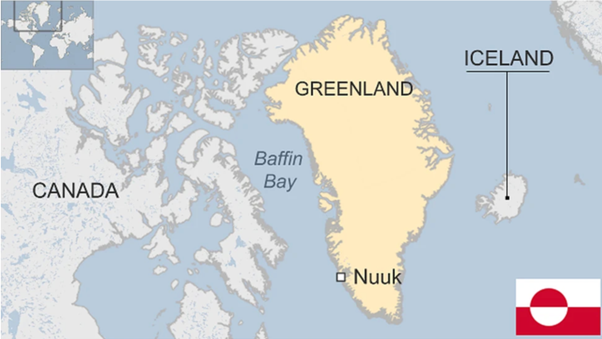
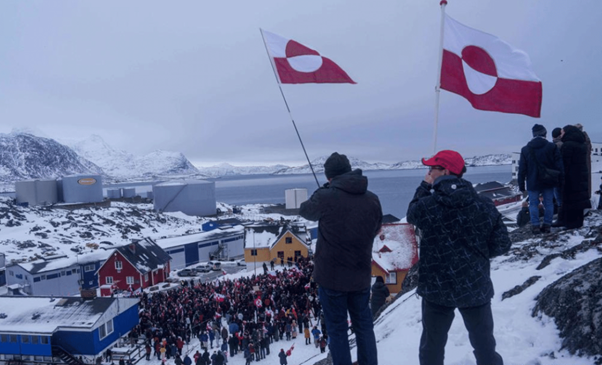 Greenland is a Danish colony which, while now having significant autonomy and their own government, has historically been neglected, and those indigenous to the territory continue to be seen as second class citizens in Denmark. Greenland is currently pursuing a viable path to independence, with some political parties arguing for an immediate referendum while others contest that the country should wait until 2027, when the commission that is investigating how to go about independence is expected to publish its report. About 60% of Greenlandic people support independence, and only 6% favour joining the US; almost 80% choose to remain part of the Kingdom of Denmark until independence can be realised rather than joining the US.
There are two key arguments the US government, specifically the Trump administration, has used to advocate for the acquisition of Greenland.
The first is for national security, as they fear that China or Russia will attempt to take the strategically located territory and be able to project power in the Arctic region, which would go against the Trump administration’s goal of American hegemony in the Western Hemisphere. However, this is countered by Denmark’s deals with the US, whereby the US can establish as many bases as it likes in the area, since Denmark knows it cannot defend the territory without a larger partner’s help. Additionally, the territory used to host 31 US military bases, which have been closed since the Cold War ended in 1990, but the US maintains a large space and air force base in the territory, and again, can establish as many as they would like as per their deals with Denmark.
The second argument, while not as explicitly mentioned by the administration, is believed to be another reason for the US’s threats and is the exploitation of Greenland’s natural resources. Greenland has large amounts of oil and rare metals, which may attract the US’s businesses. However, most of these resources are under the ice sheet currently and are thus unable to be extracted. A lot of these ‘rare’ metals, such as uranium and samarium, are actually not as rare as they may seem. The US likely fears another metal dispute with China (the world’s largest producer by far), like the one from a few years ago, where China stopped exporting these metals to the US, and the US was unable to produce cutting-edge technology that required these resources. However, this is again not a reason to take the territory, as the US also produces a lot of these metals, and instead of exporting them, they could do what China does and stockpile them in inventory to ensure that should the flow of metals from elsewhere stop, they still have plenty in reserve.
Thus, the two reasons given by the Trump administration for the annexation of the territory seem rather flimsy; perhaps it is simply to make the map look good. We just don’t know what they’re thinking.
 We should also mention the fact that Greenland is still a sovereign territory of Denmark, so to invade it would be an act of war and a breach of just about every piece of international law we have established since WW2, precisely to stop another country from simply taking territory as it pleases. It would also likely destroy NATO as an attack by one member state on another would be unprecedented and possibly set a precedent for the future where NATO members can simply attack each other as they like. There is also the matter of NATO’s Article 5, which can be invoked when a member country is attacked, which calls in all other members into the fight. This has only been used once in history, ironically by the US, following 9/11, and in the operation in Afghanistan, Denmark was actually the country to lose the most service members per capita. This thus also refutes Trump’s doubt in his NATO allies’ willingness to fight alongside the US, and he has also claimed that if there were a conflict, NATO would not come to the US’s aid, even though, again, the US is the only one to have used Article 5, and NATO rushed to the US’s aid.
 Europe presented a united response, sending troops to the territory and threatening the cancellation of its $1.5 trillion trade deal with the US. It also dusted off its retaliatory tariffs against the US prepared last year ahead of the trade deal and some called for the Union’s ‘trade bazooka’ to be used which is a piece of legislation from 2023 that aims to ‘protect the EU and its member states from economic coercion by third countries’ and would essentially place huge penalties on the third country should the EU deem its actions incompatible with what the EU was led to believe.
Trump eventually backed down on the threat against Greenland last week in what was seen as a major political win for the EU, dubbed by some as a ‘staring contest between the two in which Trump blinked first’. Thus, Greenland is safe, Europe won, and Trump lost.

